

Bottom Line Up Front
This issue covers the July 2-9 window plus a handful of older items, on quantum financing, EU chip funding, and small-market AI infrastructure, that had not previously run in the weekly InfraVantage.AI newsletter.
The intersection of geopolitics and AI – the main focus of InfraVantage – is shifting focus from high-level policy announcements to implementation. Sovereign wealth funds are deploying unprecedented capital across multiple distinct strategies. Abu Dhabi’s MGX closed a record $49 billion fund to buy across the entire AI stack, contrasting with Saudi Arabia’s focus on domestic data center ownership, Qatar’s infrastructure-only joint venture, and Singapore’s strategy of pure equity stakes in AI labs. Japan’s government-backed Noetra consortium deviates further from these investment-return strategies, funding physical AI and robotics to directly offset an aging domestic workforce.
AI is proving to impact both physical and cyber security. NATO established a unified $40 billion counter-drone marketplace to address airspace vulnerabilities through collective, pre-certified procurement of AI-enhanced systems. In Western Europe, the European Commission launched an operational cybersecurity risk-evaluation regime to test advanced AI models before market entry. Meanwhile, Taiwanese prosecutors expanded detentions in the Super Micro chip-diversion case. That highlights ongoing legislative negotiations with Washington to transform illicit AI chip routing into a standalone criminal offense rather than a paperwork fraud violation.
Signal vs. Noise
Below is a summary of recent developments at the intersection of AI infrastructure, national security, and geopolitics, our views on why they matter, and their implications for key players.
08-Jul-26
Telefónica joins QUARTERNEXT consortium to push quantum-safe networks toward certification
A six-member European consortium, including Telefónica and Austria’s AIT alongside four quantum-hardware SMEs, launched QUARTERNEXT on July 8 to move quantum-safe communication systems toward industrial-grade certification. The project develops continuous-variable quantum key distribution hardware and software, and will test multi-vendor interoperability on Telefónica’s live TEFQCI network infrastructure. It builds on the prior three-year QUARTER project and aligns with the EU’s EuroQCI initiative to interconnect member states via secure quantum networks.
Why it matters
Telefónica’s role here is not just customer but lead partner on the software-defined networking architecture. This is a sign that telcos are positioning themselves as infrastructure integrators for quantum-safe networking rather than waiting to buy finished systems from vendors. Telcos with existing fiber networks and SDN expertise are natural testbeds for quantum key distribution at commercial scale, and whichever operator gets there first accumulates a certification and interoperability head start peers will need to match.
Source: https://thequantuminsider.com/2026/07/08/quarternext-quantum-safe-communications/
07-Jul-26
NATO allies commit more than $40 billion to counter-drone defense over five years
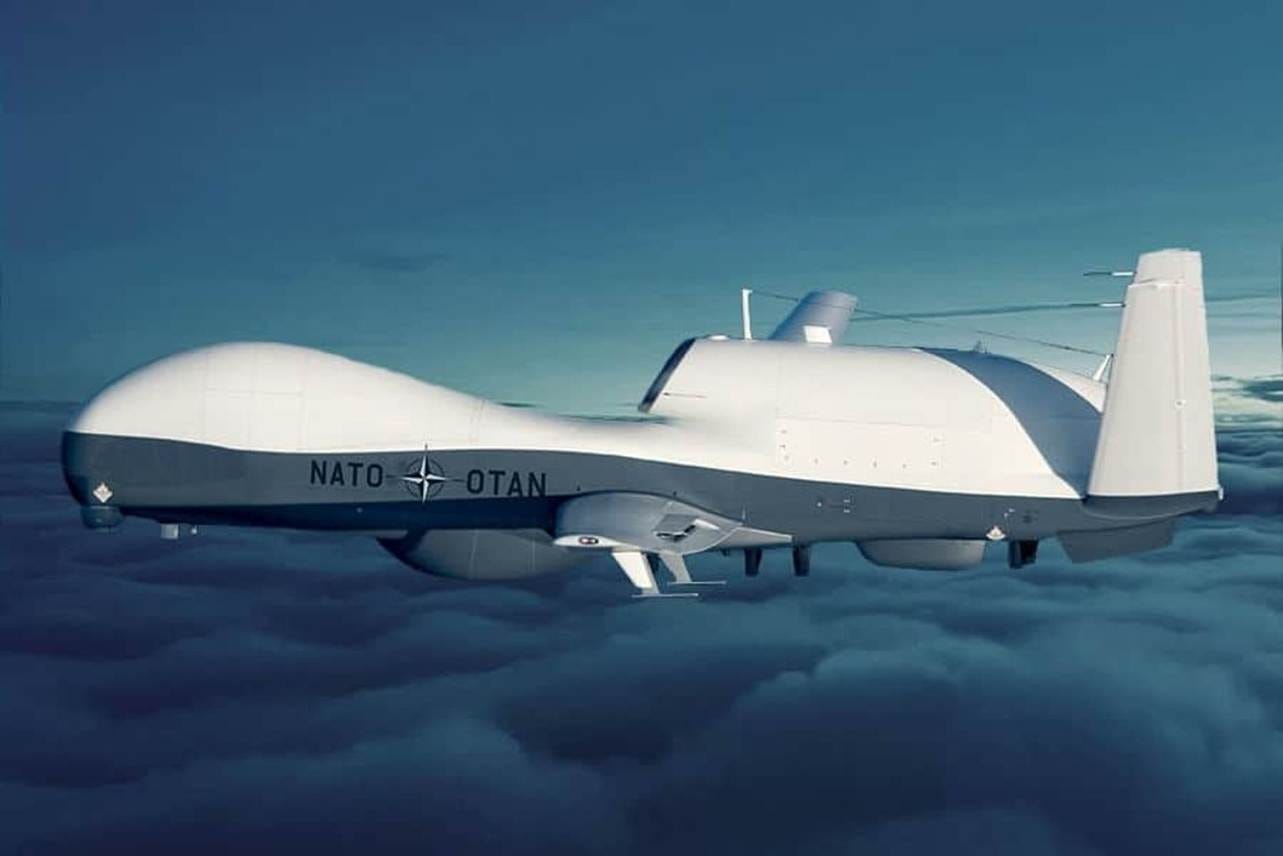
NATO Secretary General Mark Rutte announced the commitment at the Alliance’s Defence Industry Forum in Ankara on July 7, alongside twenty member states joining a new “Drone Edge” initiative. The package has three components: a NATO counter-drone marketplace stocking systems that are NATO-tested and NATO-compatible for direct member purchase; expanded operator training through NATO Flight Training Europe, targeting five times the current number of certified counter-drone operators by the end of 2027; and a major surveillance-drone procurement contract run through the NATO Support and Procurement Agency, including up to five Northrop Grumman MQ-4C Triton uncrewed aircraft, with Norway, Finland, Germany and Denmark signing letters of intent to join that purchase. AI is integral to NATO’s anti-drone efforts. Rutte said the Alliance must expand its ability to detect, identify and neutralize drones capable of violating Allied airspace. The commitment sits alongside a separate $26 billion pledge on integrated air and missile defense announced at the same forum.
Why it matters
A $40 billion counter-drone line item is NATO conceding that mass-produced, low-cost drones, not precision missiles, are the more urgent near-term threat to member airspace. That’s a lesson pulled directly from three years of Russian and Ukrainian drone-saturation tactics, supplemented by Iran’s more recent use of drones in and around the Strait of Hormuz. NATO’s collective procurement has historically been slow enough that individual members buy incompatible counter-drone equipment on their own timelines. A shared, pre-certified catalog is an attempt to shortcut years of national certification processes. The fivefold training target is also key. Counter-drone hardware is only as effective as the personnel operating it, and NATO’s own framing acknowledges a staffing bottleneck as much as a technology one. Hosting the announcement in Ankara is not incidental: Turkey’s Baykar, the dominant low-cost drone manufacturer supplying both NATO members and non-aligned buyers, stands to gain disproportionately from a marketplace built around NATO-compatible systems. Ankara has clear commercial incentive to see the initiative move fast. Whether NATO’s collective procurement machinery can actually execute on that speed, given its track record, is an open question.
07-Jul-26
European Commission moves from AI Act principles to an operational cybersecurity-AI evaluation regime
The European Commission presented its Action Plan on Cybersecurity and Artificial Intelligence on July 7, building directly on the AI Act, the Cyber Resilience Act, the NIS2 Directive and the Cyber Solidarity Act. The plan has five components: (1) an EU evaluation capacity, developed with the AI Office, to assess advanced AI models’ cybersecurity risks before market entry, as the AI Act already requires in principle; (2) a “structured access” blueprint, developed with the EU Agency for Cybersecurity (ENISA), defining terms under which public and private organizations can access the most advanced AI systems; (3) a secure AI-testing platform built jointly by ENISA and the Commission’s Joint Research Centre, including simulated environments for critical-sector operators; (4) guidance and an open-source security campaign to help organizations use AI to find and fix vulnerabilities faster; and (5) an EU Grand Challenge on AI for cybersecurity to fund AI-powered security research. The plan draws on the AI Factories and Gigafactories infrastructure already announced under the Tech Sovereignty Package.
Why it matters
This is the Commission converting AI Act obligations that existed on paper into agencies and platforms that can actually enforce them. This closes a gap between the Act’s stated requirement that advanced models be risk-assessed before market entry, and the EU’s prior lack of any body equipped to run that assessment. The “structured access” blueprint is the more consequential piece for non-EU vendors: it shows that Brussels plans to set its own terms for how European public and private organizations access frontier AI systems built in the US or China, rather than accepting whatever access terms hyperscalers offer by default. That puts the Commission on a collision course with vendors who have resisted EU-specific technical requirements as a cost of doing business in a market that generates a fraction of US or Chinese AI revenue. The plan’s reliance on AI to defend against AI-enabled attacks – such as automated vulnerability discovery and automated attack scaling - reminds us that both offense and defense are running at AI speeds in today’s cybersecurity wars.
07-Jul-26
Atos launches MogwAI, a sovereign generative and agentic AI platform for regulated sectors
Atos announced Atos MogwAI on July 7, a sovereign generative and agentic AI platform aimed at moving enterprise and public-sector clients from AI experimentation to production deployment while retaining control over data, models and infrastructure. The platform covers the full AI value chain, from infrastructure to business use cases, and includes specialized agents branded “Gen-i,” full workflows, connectors to client information systems, and collaborative spaces built on clients’ own contracts, reports and operational data. Deployment options include SaaS on SecNumCloud-certified infrastructure (France’s state cloud security qualification), on-premises, and multicloud. The launch is framed as one pillar of Atos Group’s three-part strategy: agentic AI for enterprise-scale operations, digital sovereignty over data and infrastructure, and cybersecurity built in from design. It follows Atos’s earlier “Sovereign Agentic Studios” model for moving clients from AI pilots to production deployment.
Why it matters
With MogwAI, Atos is positioning itself as an end-to-end sovereign alternative to US hyperscaler AI stacks for European public-sector and regulated-industry clients. This comes at a moment when Atos itself is mid-refinancing and needs a credible growth narrative beyond its legacy IT-services business. The SecNumCloud deployment option is crucial: it lets Atos sell directly into French government and critical-infrastructure procurement contracts. These increasingly require certified sovereign cloud, a market Microsoft and AWS can only enter through joint ventures with French partners under the same qualification scheme. Atos is competing less against OpenAI or Anthropic directly and more against other European sovereign-AI platform plays, such as Mistral’s enterprise offerings, SAP’s agentic tools, and France’s own DINUM-built “L’Assistant.” Atos clearly benefits from existing legacy relationships in the European tech sector, but competing directly with the deep-pocketed US-based hyperscaler products may be a challenge.
07-Jul-26
EU opens five new Chips Joint Undertaking funding calls, betting on speed over scale
The Chips Joint Undertaking opened five calls (RFPs) on July 7, to close in mid-September: two bottom-up “ECS Global” calls (40 million euros for higher-TRL projects, 50 million euros for lower-TRL research), three narrower 20-million-euro “resilience” calls targeting power electronics, photonics and health applications, and a 3-5 million euro joint call with Japan. All are single-stage submissions with a roughly ten-week turnaround to award. That’s faster than the multi-stage process used for the JU’s larger pilot-line projects. The Chips JU channels up to 3.3 billion euros of EU and national funding into semiconductor research, pilot lines, design tools and skills under the Chips for Europe Initiative.
Why it matters
